Photo Story
Journal 01
/
The Polytunnel
Words by Meg Brooks
Photographs by Marco Kesseler
Two snails are moving steadily towards a point of impact. They track over the polytunnel feeding on the film of algae that has formed on the plastic, one has a yellow shell, the other is striped. During the cooler parts of the day the outer skin is dotted with slugs and snails, grazing looping patterns into the green. Light filters through, and illuminates the dark ripples of their muscles as they move over the surface. If you press your finger into the plastic, you can feel the minute vibrations of radulas scraping the skin, a tremor amplified by the volume of space. The two snails meet, eyestalks touching for a moment, before they recoil in unison.
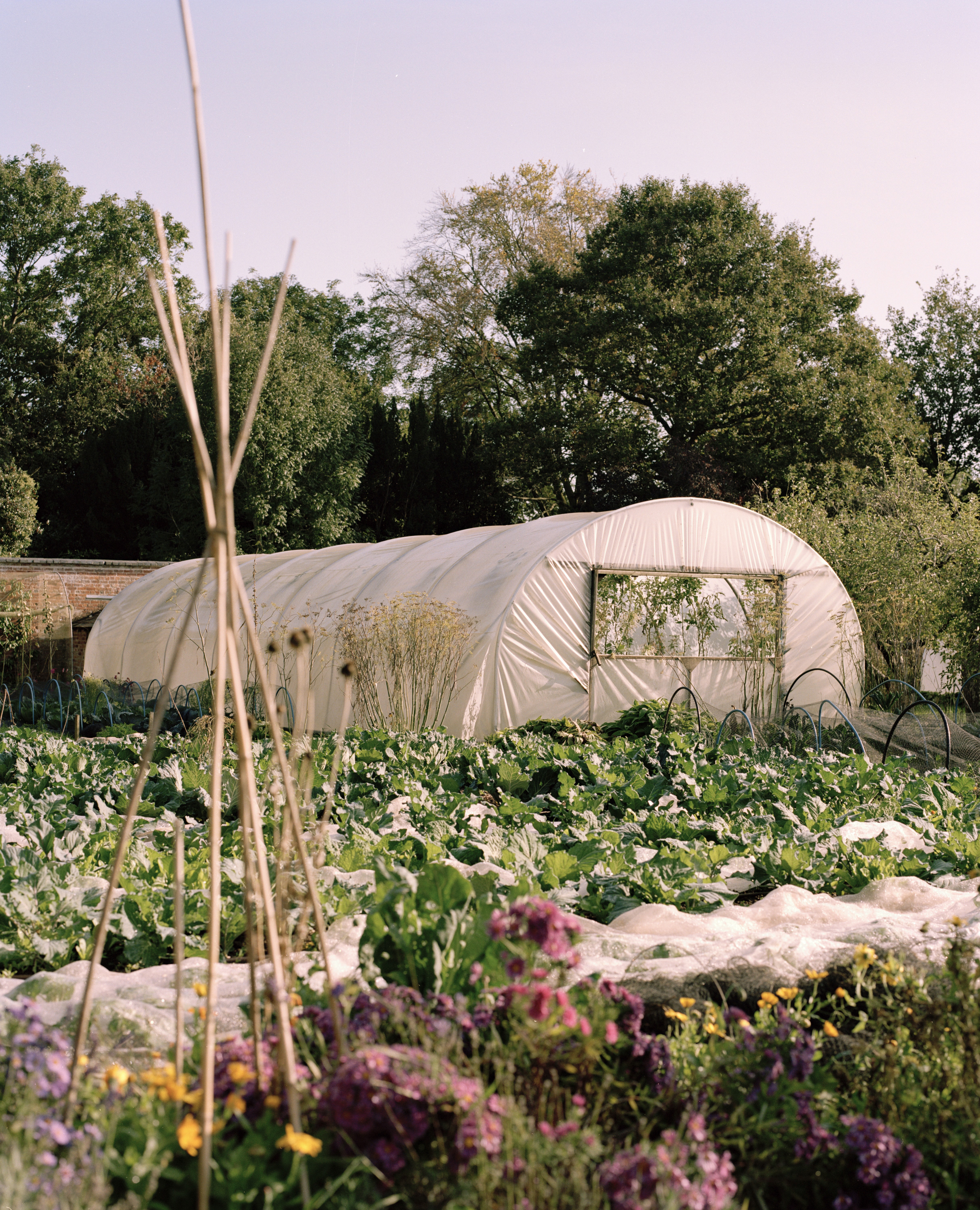
This is a hidden landscape, where seasons are stretched and softened. Lifting aside the plastic sheet you cross a threshold defined by heat, and in the summer the air is sticky as it rises from the ground. A humidity that fills your mouth as if your tastebuds might bloom. Moisture lingers and collects in fallow corners, which are thick with self seeded weeds and wildflowers. Small intrusions which compound over time, drawing insects and animals into the tunnels cosmos. As a child I spent hours catching and releasing bees and butterflies, fascinated by the thrumming bodies in my hands. Horseflies I would slap against the plastic leaving streaks of blood, their remains scavenged by lizards and toads.
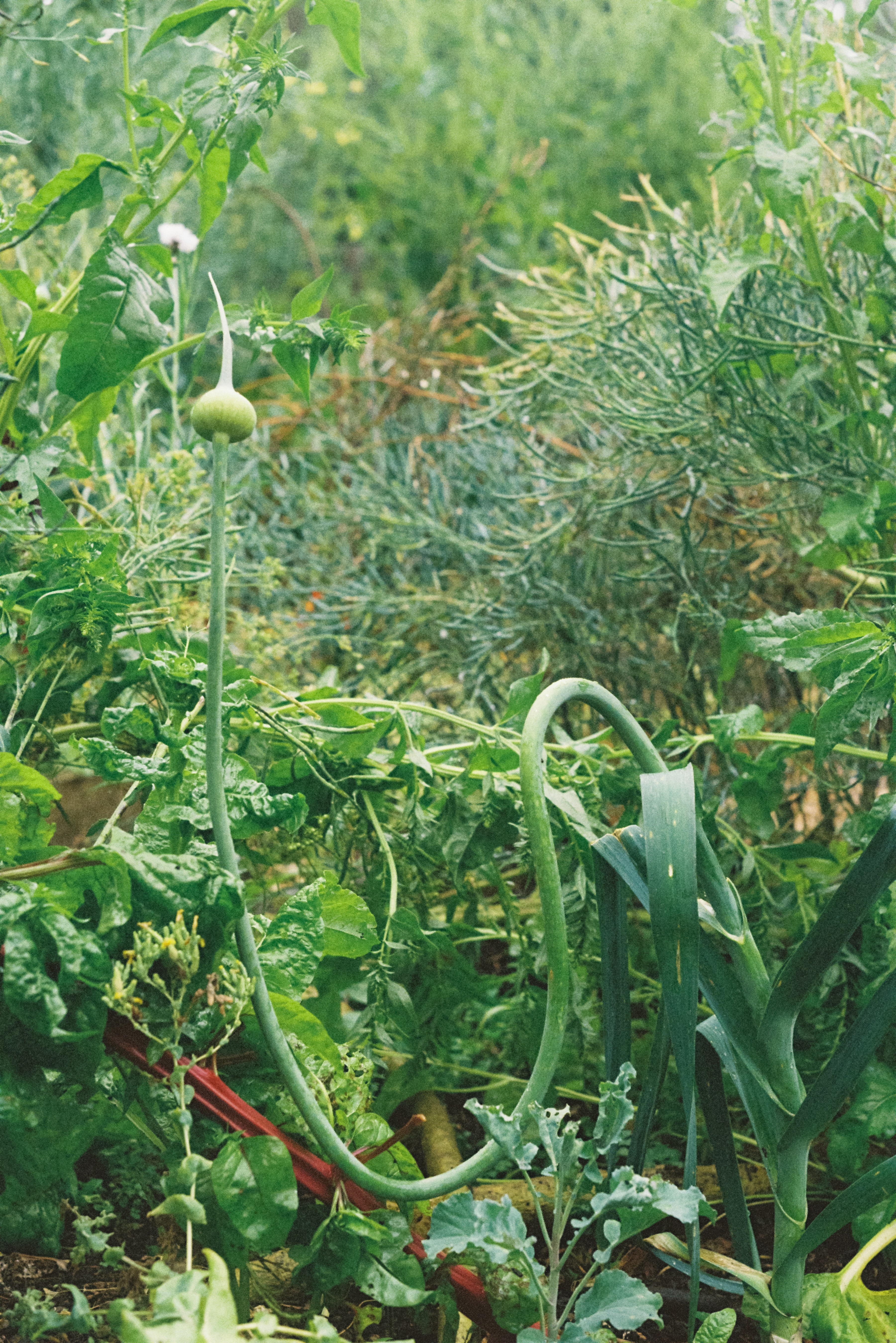
Beyond these edgelands, the cultivated crops move through cycles. Salad and chard is replanted throughout the year in checkered strips. Later in the season there are squash and courgettes as well as tomato, bean and cucumber vines which reach the apex. When the tunnel is cleared, the strips are pulled back exposing animal nests. Mice scatter, but the slow worms are usually startled into momentary stillness. Smooth scaled and golden. They are not unusual to find, but each encounter is somehow bewitching. Despite their name they can move quickly, gathering energy from the warmth of the ground. You have to be swift to catch them, lifting your shirt to create a pocket for the knots of coiling bodies. They are released into the weeds where they will hunt the slugs, safe from the rotovator.
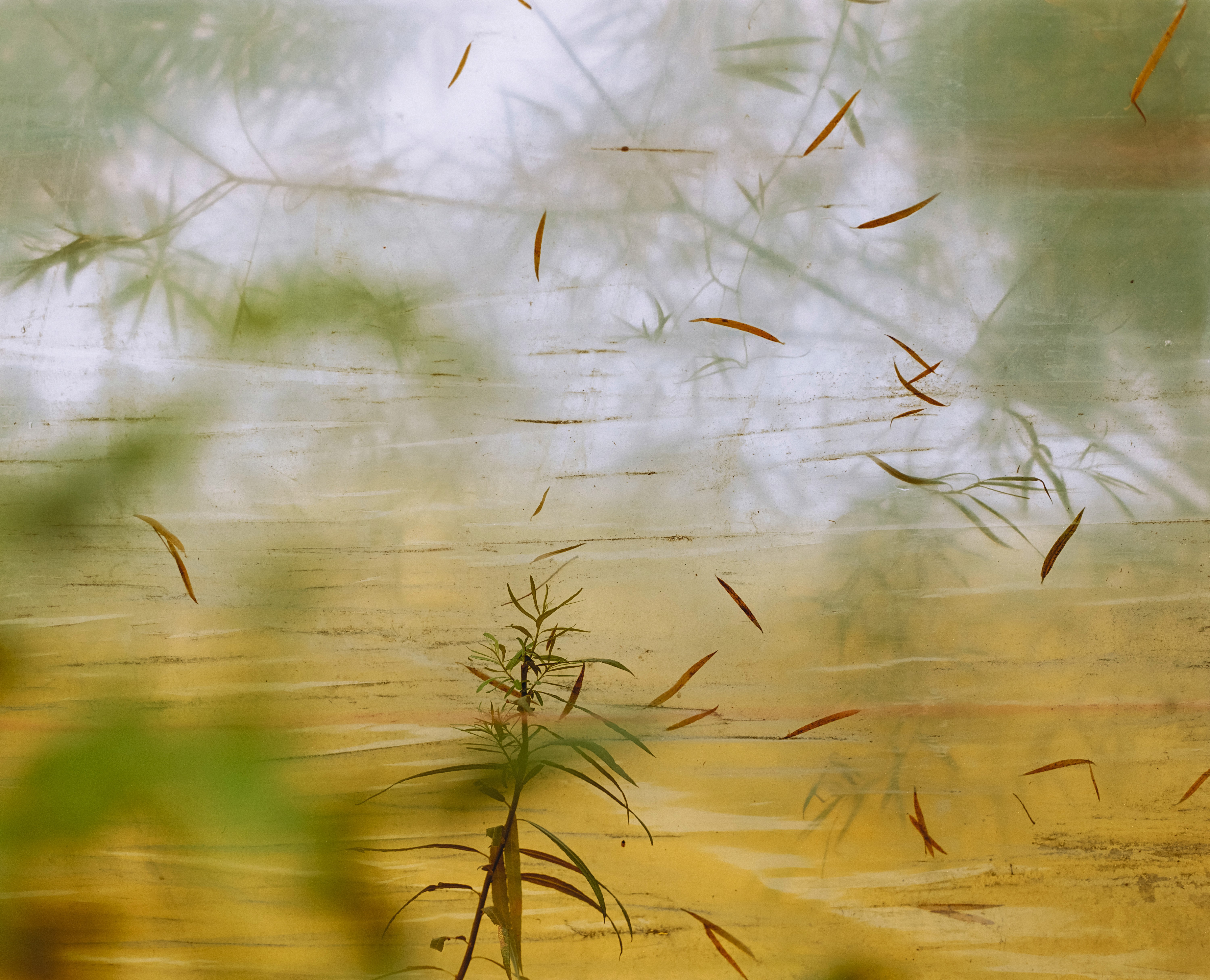
Sun and strong winds thin the plastic and pull it away from the structure and periodically the tunnel must shed its skin and be renewed.
The old crops are churned back into the earth, the soil dark and soft like muscovado. You learn the resistance of this mud, how to press the plants into the ground so that the roots won’t be damaged. And whilst we have farmed a small part of this valley for decades, the soil reveals older inhabitants. Throwing up shards of ancient pottery that may have been used in the time of the Roman Emperor Tiberius, who built the first specularium glazed with mica stone so he could eat cucumbers throughout the year. From this structure we can trace the origins of the polytunnels in which our own cucumbers are grown.
Aside from the polytunnels, much of the land is laid to orchards with some open meadows. The land is steep, dropping down the valley towards a stream, which is fed by water from springs deep in the hill, so rich in iron that it stains the rocks red. Over time the polytunnel is weathered by its surroundings and moves through its own cycles. Storms push through the valley, lightning reflecting off the ribs, and inside the tunnel the rain is deafening as it hammers on the surface.
share